Ram Head Embroidery Design
First Impression: Rugged, Earthy, and Instantly Recognizable
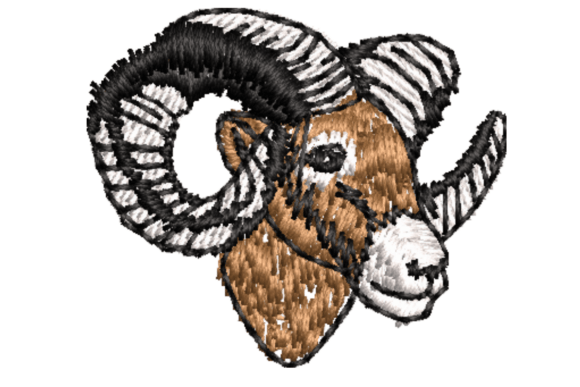
As an embroidery designer who’s prepped over 200 craft fair booths—and watched thousands of shoppers slow down at a table—I’ll tell you straight: Ram Head Embroidery Design lands with quiet authority. It’s not cute. It’s not cartoonish. It’s not minimalist or overly ornate. It’s rugged, earthy, and confidently rustic—a perfect fit for the Farm Animals category without leaning into cliché. The emphasis on those beautifully curved, commanding horns gives it instant visual weight. At a glance, it reads as strong, grounded, and artisan-made—not mass-produced. That’s gold for handmade markets.
Where It Shines: Craft Fair Product Placement That Converts
In my booth setup—featuring embroidered tote bags, aprons, tea towels, patches, caps, fabric pouches, pillow covers, and small giftable items—the Ram Head Embroidery Design performs strongest where its bold silhouette can breathe:
- Tote bag design: Centered on natural canvas or heavyweight cotton, it becomes a statement piece—especially when paired with earth-toned thread colors. Customers consistently pick up these totes first.
- Apron embroidery: Positioned just above the pocket (not too high, not too low), it adds character without overwhelming function. Works especially well on denim or linen-blend aprons.
- Embroidered patch: This is where the design truly flexes. As a sew-on or iron-on patch, it gains versatility—crafters apply it to jackets, backpacks, and market bags. Its clean outline and defined horns hold up beautifully at 3–4 inches.
- Tea towel embroidery: On tightly woven, low-lint cotton towels, the stitch density delivers texture without snagging. Avoid overly textured or terry-loop towels—the horns lose definition.
It’s less effective on curved cap surfaces unless resized and re-digitized for that specific application—and even then, I recommend testing on scrap first. On small pouches or pillow covers under 8”, the design feels cramped unless scaled thoughtfully.
Photography & Online Appeal: A Strong Etsy Seller Asset
The Ram Head Embroidery Design photographs exceptionally well—its contrast-rich contours translate cleanly across lighting conditions. For Etsy sellers and digital embroidery file listings, that means fewer retakes and stronger thumbnail recognition. Pair it with a printable mockup showing the design on three different fabric colors (cream, charcoal, olive) and you’ve got a listing that builds trust fast. Buyers scanning for “farm animal embroidery” or “rustic handmade gift” will pause—its clarity and intentionality stand out amid busier, trend-chasing designs.
Production Realities: What You Need to Know Before Batch-Making
This isn’t a “set-and-forget” machine embroidery design. Its strength lies in detail—but that demands attention during production:
- Stitch density matters. Those horns and facial contours carry moderate density. On thick fabric (like heavy denim aprons), use cutaway stabilizer—not tear-away—to prevent puckering.
- Fabric texture affects readability. Avoid highly napped or loosely woven fabrics for smaller applications. The design’s rugged charm fades fast on fuzzy terrycloth or slubbed linen if thread tension isn’t dialed in.
- Dark fabric? Prioritize thread contrast. Test your chosen thread colors on black, navy, or charcoal swatches before stitching 50 units. A warm cream or oatmeal thread often reads richer than stark white.
- Small sizes need simplification. Below 2.5”, fine horn details blur. If offering a mini version for keychains or tiny pouches, request a simplified variant—or plan to hand-finish with subtle French knots for dimension.
Booth Impact & Buyer Engagement: Why It Moves Units
In person, the Ram Head Embroidery Design does something subtle but powerful: it invites touch. The stitched contours catch light differently across angles, and customers instinctively run fingers over the horns—especially on tea towels and pillow covers. That tactile moment builds perceived value. It also supports brand consistency: whether you’re selling embroidered patches, market bags, or handmade gifts, this design signals craftsmanship, not craftiness. At a crowded fair, it helps your booth feel curated—not cluttered.
Designer Notes You Can’t Skip
Before cutting your first fabric or uploading to Etsy:
- Test the embroidery file on scrap fabric—same weight and weave as your final product.
- Review spacing between horn tips and outer edge. Tight margins cause thread breaks on dense curves.
- Confirm hoop size compatibility. Does it fit your standard 5x7 or require 6x10? That impacts your workflow speed at the fair.
- Inspect stitch density in the eye and nostril areas. Overly dense fills there can look muddy—especially on textured towels.
- Use the right stabilizer. Medium-weight cutaway for most apparel; lightweight tear-away for tea towels only if fabric is smooth and stable.
- Create at least one real mockup—not just digital. See how it drapes, folds, and wears after a wash test.
- Compare fabric colors side-by-side. A design that pops on oat linen may disappear on heather gray.
- Verify commercial licensing before selling finished products. This is non-negotiable for small shop product integrity.
Final Thought: A Timeless Craft Fair Staple
The Ram Head Embroidery Design isn’t chasing trends—it’s built for longevity. It fits seamlessly into farmhouse, modern rustic, and heritage-inspired collections alike. For Etsy sellers, Cricut crafters, boutique makers, and embroidery business owners, it’s a rare find: a design that balances visual impact with production practicality. When executed well—with attention to thread, stabilizer, and scale—it transforms ordinary handmade products into memorable, giftable, booth-drawing pieces. In short: it sells. Not because it’s flashy, but because it feels true.