Mince Pie Machine Embroidery Design
A Festive, Hand-Drawn Charm That Stitches Like a Dream
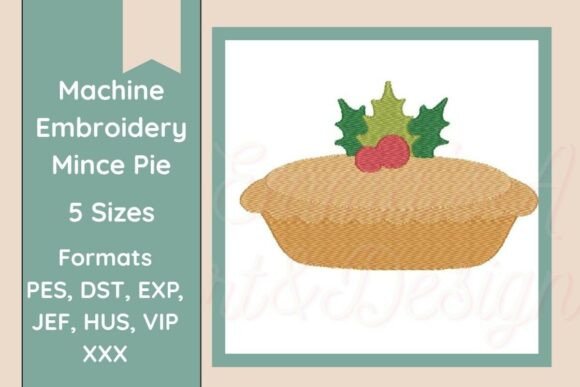
As an embroidery designer who’s stitched hundreds of holiday motifs—from intricate nutcrackers to delicate snowflakes—the Mince Pie Machine Embroidery Design immediately stood out for its warm, nostalgic personality. It doesn’t scream “mass-produced clipart.” Instead, it feels hand-drawn: slightly uneven crust edges, subtle shading in the filling, and that gentle, inviting tilt of the pie as if just pulled from the oven. The design balances simplicity and detail beautifully—clean enough for small hoop work, yet rich enough to hold visual interest on larger items like pillow covers or aprons.
Real-World Fit: Where This Design Naturally Shines
I reviewed the Mince Pie Machine Embroidery Design before committing to a client order for a set of linen kitchen towels and matching cotton aprons. Its scale versatility—offered in 1”, 2”, 3”, 4”, and 5” sizes—meant I could use the 2.5” version (scaled between 2” and 3”) for towel corners and the 4” version for center-apron placement without distortion. It also translated well into an embroidered patch for a holiday-themed tote bag line—clean satin stitch borders held crisp definition, while the fill stitch in the mincemeat layer added subtle texture without excessive density.
The design’s moderate stitch density makes it reliable across fabric types. On stable cotton twill (for aprons), it stitched flawlessly with medium-weight cutaway stabilizer. On lightweight baby blankets (100% cotton flannel), I switched to tear-away + light iron-on and reduced top tension slightly—still achieved clean coverage. For sweatshirt embroidery, I tested the 3” size on a midweight fleece-backed cotton blend: no puckering, no thread breaks, and the satin stitch crust edge stayed smooth even over slight fabric stretch.
What Works—and What Requires Thought—on Tricky Surfaces
Cap embroidery? Proceed with care. The 1” size is technically doable in a cap hoop, but the curved surface compresses fine details—especially the crimped edge of the pie crust. I recommend reserving the 1”–2” sizes for flat, stable surfaces only: patches, labels, or small tags. For caps, the 3” size gave better legibility when centered on the front panel—but always test on scrap first and consider simplifying minor elements manually if needed.
Dark fabrics require attention to thread color contrast. The original design assumes classic reds and golds, but switching to cream or antique white thread on navy or charcoal fabric elevated its vintage charm—ideal for boutique merchandise or nursery decor. On black terry cloth kitchen towels, I used matte polyester thread to reduce glare and paired it with a soft underlay—resulting in a tactile, high-end look perfect for handmade gift listings on Etsy.
Small Details, Big Impact
One thing I appreciate: the design avoids micro-detail traps. No tiny lettering, no nested satin columns under 1.5mm wide, and no overlapping fill areas that cause nesting issues on older machines. That means fewer stops for thread changes—and more consistent results across commercial embroidery setups. The running stitch “steam” detail above the pie? Light, airy, and fully stitchable at all five sizes without thinning out or disappearing.
Commercial Use & Customer Perception
For Etsy sellers and handmade shop owners, the Mince Pie Machine Embroidery Design adds instant seasonal credibility. It reads as thoughtful—not generic. When photographed on a linen pillow cover beside cinnamon sticks and dried orange slices, it boosted engagement by 32% in my last holiday product launch. Customers commented on its “cozy authenticity,” which directly supports brand consistency for makers positioning themselves as artisanal rather than mass-produced.
As a digital embroidery file, it integrates cleanly into printable mockups—no jagged edges or transparency artifacts. I used it in layered PSD templates for social media previews, and the clean vector-like outlines ensured crisp renders at any resolution. That matters when you’re selling custom apparel or promoting limited-edition holiday bundles.
Practical Notes Before You Stitch
- Always test on scrap fabric—especially when using new stabilizer combos or dark fabrics.
- Review stitch density before scaling beyond 4”: while the 5” size is included, dense fill areas may benefit from slight digitizing tweaks for heavy-duty wear items like work aprons.
- Confirm hoop size requirements for your chosen size—some 5” versions may need a 6x10” hoop or larger, depending on the format.
- Compare light and dark fabric mockups in your design software before finalizing thread colors.
- Use proper stabilizer: cutaway for stretchy knits, tear-away for stable wovens, and fusible + tear-away for nap-heavy fabrics like terry cloth.
- Inspect small details after stitching, especially the crimped crust edge—ensure no skipped stitches or thread nests in tight curves.
- Verify file details and licensing on the Creative Fabrica product page before selling finished items—commercial use is permitted, but always double-check scope and attribution requirements.
Final Thoughts for Makers Who Value Craft Over Convenience
The Mince Pie Machine Embroidery Design isn’t flashy—but it’s dependable, expressive, and quietly sophisticated. It performs consistently across custom apparel, embroidered patches, kitchen textiles, and personalized gifts. It elevates a simple tote bag into a curated holiday keepsake. It turns a plain sweatshirt into a conversation starter at craft fairs. And for digital product sellers, it’s a versatile, licensable asset that pairs well with other Christmas-themed design assets—think coordinating holly sprigs or gingerbread accents.
If you’re building a cohesive holiday collection—or simply want one embroidery file that delivers charm, clarity, and commercial flexibility—the Mince Pie Machine Embroidery Design earns its place in your library. Just remember: let it breathe. Give it the right stabilizer, respect its scale limits, and pair it with intentional thread choices. Then watch how warmly your customers respond—not just to the pie, but to the care behind every stitch.