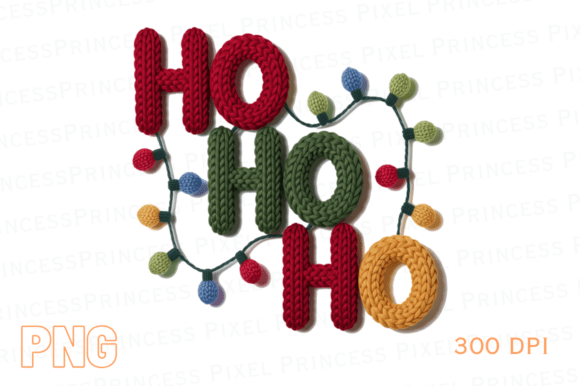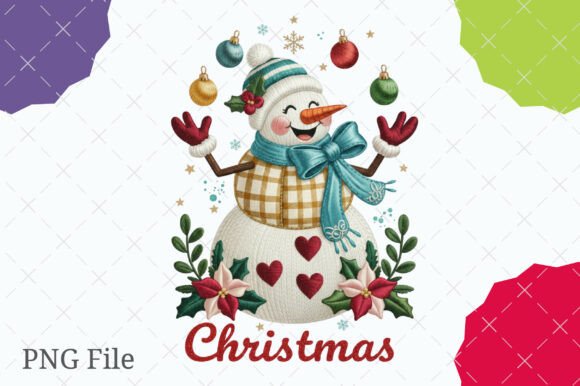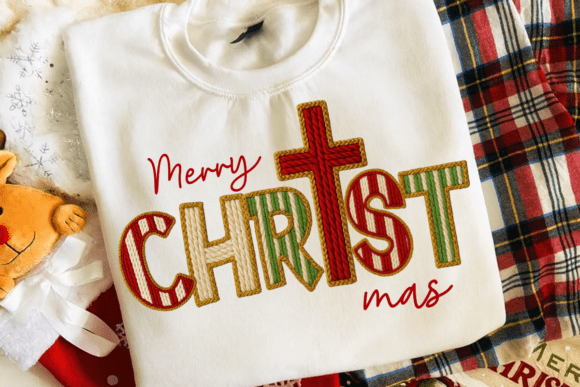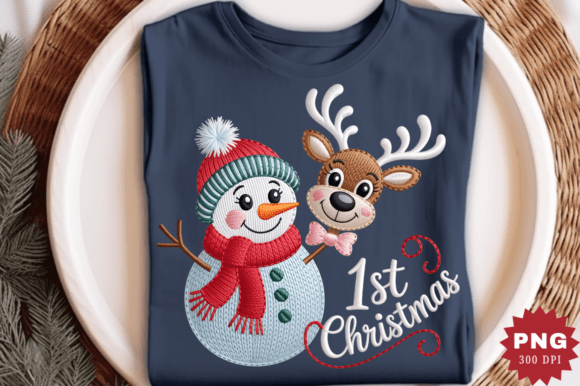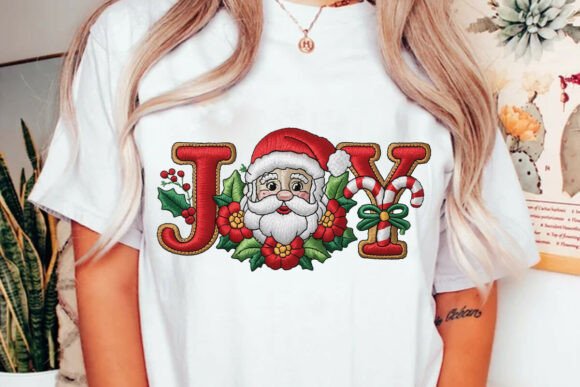
Joy Faux Embroidery Christmas PNG
First Impression: Festive, Friendly, and Booth-Ready
As an embroidery designer who’s packed up 47 craft fairs in the past six years, my first glance at Joy Faux Embroidery Christmas PNG tells me this isn’t just another holiday clipart file—it’s a mood. The name alone evokes warmth, nostalgia, and handmade charm without leaning too hard into kitsch or minimalism. It feels festive but not frantic, decorative but not overwhelming—exactly the kind of design that stops shoppers mid-aisle at a local makers’ market. Since it’s categorized under Illustrations and labeled a Graphics product, I know upfront it’s built for versatility—not just stitching, but printing, cutting, and layering across mediums.
Where Joy Faux Embroidery Christmas PNG Shines on Craft Fair Products
This design excels where handmade appeal meets instant readability: on tote bag designs, apron embroidery, and tea towel embroidery. Its balanced composition—likely with clear outlines, generous negative space, and intentional weight distribution—translates beautifully to fabric surfaces where texture and drape matter. On a linen tea towel, it reads as cozy and intentional; on a canvas tote, it holds presence without shouting. As an embroidered patch, it’s equally strong—clean edges mean crisp heat-transfer or machine-embroidered versions hold shape even after washing.
For pillow covers and small pouches, Joy Faux Embroidery Christmas PNG works best when scaled to 3–4 inches wide. Too small, and subtle details vanish; too large, and it risks flattening the handmade character buyers love. On caps, I’d recommend using only the central motif (not full-word layouts) and testing curvature carefully—PNG-based files need smart vector conversion or careful digitizing to avoid distortion on rounded surfaces.
What Makes It Sell on the Floor—and Online
At a craft fair, attention lasts 3 seconds. Joy Faux Embroidery Christmas PNG wins because it’s emotionally legible: joyful, seasonal, and quietly confident. Customers don’t need to squint or decode—it communicates warmth and craftsmanship instantly. That clarity carries over to Etsy listings and printable mockups: it photographs cleanly on natural light, pops against neutral backdrops, and scales well for thumbnail previews. For small shop products, its adaptability means one design asset can support multiple SKUs—tote + apron + patch bundles feel cohesive, reinforcing brand consistency without repeating the same layout.
It also supports batch production well—if your digitized version avoids excessive stitch density or micro-details. Since the original is a PNG, final machine embroidery design quality depends entirely on how thoughtfully it’s converted. A clean, open outline translates faster and stitches more reliably than tightly packed flourishes.
Practical Production Notes Every Embroidery Designer Should Check
Before cutting your first hoop, run these checks:
- Test on scrap fabric—especially if using textured towels or thick cotton blends. What looks sharp on screen may blur on terry cloth.
- Verify thread contrast—light designs on dark fabric demand higher stitch density or underlay; dark-on-light is more forgiving.
- Review spacing and isolation—if Joy Faux Embroidery Christmas PNG includes lettering, confirm all characters are legible at 2 inches tall. Tiny serifs or thin connectors often vanish in stitching.
- Confirm hoop size compatibility—some motifs stretch wide. If your standard hoop is 4×4”, you’ll need to resize or reposition before digitizing.
- Inspect stitch density—dense fills trap moisture and stiffen fabric. For handmade product softness, aim for balanced coverage, not maximum fill.
- Use the right stabilizer—cutaway for knits, tear-away for stable wovens, and mesh for lightweight linens. Skipping this step ruins drape and hand-feel.
- Create at least one real mockup—a stitched sample on your actual tote fabric beats ten digital previews. Hold it in booth lighting. Does it glow? Or fade?
- Compare fabric colors—a warm cream base lifts the “joy” feeling; charcoal gray adds modern contrast. Avoid muddy beiges unless your brand leans rustic.
- Confirm commercial licensing—since this is a digital embroidery file intended for resale, verify usage rights before applying to commercial embroidery products or bundled craft fair product kits.
Careful-Use Considerations for Maximum Clarity
This design likely includes fine lines, gentle curves, or compact letterforms—elements that test well on smooth cotton but falter on textured surfaces. Avoid placing it on:
- Heavy denim or corduroy—stitch definition blurs fast.
- Curved cap fronts—unless fully digitized with contour compensation.
- Dark fabric with light thread—check for sufficient underlay to prevent shadowing.
- Sub-2-inch applications—tiny details in Joy Faux Embroidery Christmas PNG may collapse into blobs.
- High-pile fabrics like fleece—stitch height overwhelms surface texture.
Final Verdict: A Thoughtful, Scalable Holiday Asset
Joy Faux Embroidery Christmas PNG isn’t flashy—but that’s its strength. In a sea of glitter-heavy, over-digitized holiday files, it offers sincerity, simplicity, and serious selling power. It elevates handmade product perception without demanding complex execution. When stitched cleanly on a linen apron or printed crisply on a kraft gift tag, it says “crafted with care,” not “designed in bulk.” For Etsy sellers, boutique makers, and weekend craft fair vendors, it’s a reliable, repeatable, revenue-ready design asset—provided you treat it like the thoughtful starting point it is, not a finished solution. Digitize wisely, test boldly, and let the joy show up in every stitch.