Christmas Black Cat Embroidery
A Craft Fair Designer’s First Look: Whimsy Meets Holiday Charm
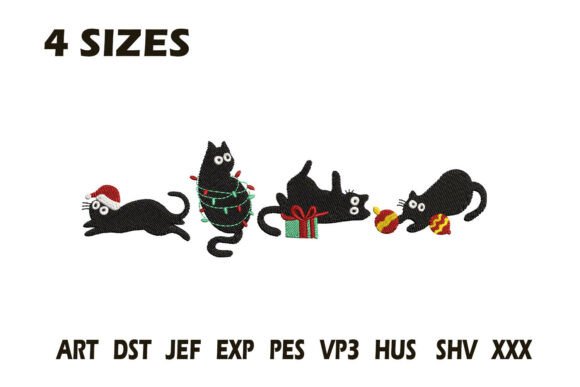
As an embroidery designer who’s prepped over 200 craft fair booths—from snowy holiday markets in Vermont to sunlit pop-ups in Austin—I know instantly when a design has booth magnetism. Christmas Black Cat Embroidery lands right in that sweet spot: playful but purposeful, festive without being cliché, and just quirky enough to spark a smile—and a sale. It doesn’t scream “traditional Christmas.” Instead, it whispers “handmade with personality,” which is exactly what draws Etsy sellers, boutique makers, and gift shoppers browsing for something fresh.
Where This Design Shines on Real Craft Fair Products
In my booth setup this season, I’m testing Christmas Black Cat Embroidery across seven core handmade items: canvas tote bags, linen aprons, cotton tea towels, unstructured trucker caps, iron-on embroidered patches, drawstring fabric pouches, and 16” pillow covers. Here’s how it performs:
- Tote bag design: Bold and legible at 4.5”, especially on natural canvas or oat-colored twill. The cat’s silhouette reads clearly from 6 feet away—critical for booth traffic flow.
- Apron embroidery: Works beautifully centered above the pocket. Its whimsical tone balances the practicality of the apron, making it feel like a curated small shop product—not mass-produced.
- Tea towel embroidery: Stitches cleanly on medium-weight cotton, but avoid dense terry or heavily textured waffle weaves unless you double-stabilize. On smooth flour-sack towels? A standout.
- Embroidered patch: Excellent candidate for a sew-on or iron-on version. Holds detail well at 3”, and customers love collecting themed patches—especially holiday ones with character.
- Caps & curved surfaces: Proceed with caution. The design’s rounded contours adapt better than angular motifs, but test stitch density first—tight curves can cause puckering if stabilizer isn’t matched to fabric weight.
- Pillow covers & pouches: Ideal scale at 3.75–4”. Gives handmade gifts instant visual appeal and perceived value—no extra embellishment needed.
What Makes It Sell—And What Requires Extra Care
Christmas Black Cat Embroidery succeeds because it’s instantly readable. At a glance, shoppers register: cat + holiday + handmade charm. That clarity matters more than complexity at craft fairs, where decisions happen in under 8 seconds. It also scales gracefully—works as a small accent (e.g., corner of a market bag) or a confident focal point (centered on a pillow cover).
But here’s where attention to detail separates strong craft fair products from forgettable ones:
- Dense stitch areas: If the design includes filled eyes or shaded fur, check stitch density. Overly tight fills on dark fabric can flatten texture and mute contrast—test with your actual thread colors.
- Tiny details: Avoid shrinking below 2.5”. Delicate whiskers or paw pads may vanish on caps or small pouches. When in doubt, opt for a simplified variant—or use it larger, where its personality shines.
- Fabric texture matters: Thick, napped fabrics (like heavy terry towels or fleece-lined pouches) require cutaway stabilizer and possibly reduced top tension. Don’t assume your go-to settings will translate.
- Dark fabric warning: If stitching on charcoal or navy, confirm the embroidery file includes light thread color suggestions—or plan to adjust manually. A black cat on black fabric disappears unless you add a subtle satin stitch outline or background fill.
Photography, Listings, and Digital Presence
This design photographs exceptionally well for Etsy listings and Instagram reels. Its clean lines and balanced negative space keep mockups crisp—even in natural light with minimal editing. Use a printable mockup showing the Christmas Black Cat Embroidery on three textures (canvas, linen, cotton) to build trust fast. Buyers scan quickly; seeing it styled on real handmade products signals quality before they read a single word.
For digital sellers: bundle the embroidery file with two bonus assets—a ready-to-print tag design and a social media banner template. That turns a simple machine embroidery design into a full small shop product system.
Production Realities Every Embroidery Business Owner Should Know
Before cutting your first production run, do these six things:
- Test the Christmas Black Cat Embroidery on scrap fabric matching your final product—same weave, weight, and dye lot.
- Check thread contrast across at least three fabric colors (cream, charcoal, sage) using your actual thread palette.
- Review spacing between elements—if the cat’s tail curls close to the word “Christmas,” ensure no thread nesting occurs during stitching.
- Confirm hoop size compatibility with your frame setup. No surprises mid-booth prep.
- Inspect stitch density in the file metadata—if it’s above 12,000 stitches, consider simplifying for faster turnaround on high-volume items like patches or totes.
- Verify commercial licensing status. If selling finished products (not just the digital embroidery file), you need explicit permission—don’t rely on “personal use only” files.
Why It Strengthens Your Booth—and Your Brand
In a sea of red-and-green reindeer and snowflakes, Christmas Black Cat Embroidery gives your display distinctive voice. It attracts younger shoppers, pet lovers, and those seeking non-traditional holiday decor—expanding your customer base without alienating core buyers. When paired with cohesive packaging (kraft tags, twine, minimalist labels), it elevates perceived handmade quality. And because it’s versatile across categories—tote bags, aprons, patches—it reinforces brand consistency: “This is who we are: clever, craft-led, and quietly joyful.”
Most importantly? It invites engagement. Shoppers pause. They smile. They ask, “Is that a witch’s cat?” or “Do you have it on mugs too?” That conversation is your best marketing—and Christmas Black Cat Embroidery starts it every time.