Tree Roots Embroidery Design File
A grounded, thoughtful motif — not just another tree
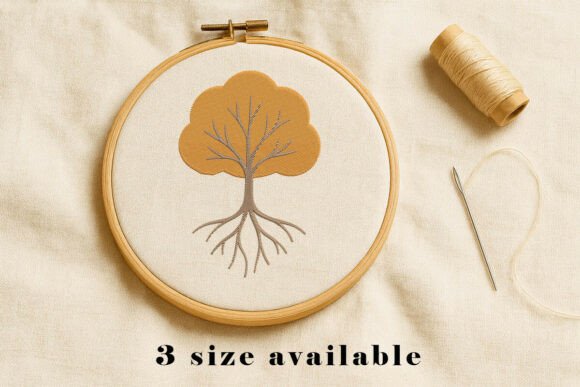
First impression? This isn’t a decorative flourish—it’s a quiet statement. The Tree Roots Embroidery Design File balances above-ground grace with below-surface strength. Branches taper gently upward; roots descend with deliberate, organic weight. There’s no clutter—no birds, no sun, no ornate borders—just the essential silhouette of connection and resilience. That minimalism works *with* embroidery, not against it: clean lines translate well into satin and fill stitch, and the negative space between root tendrils and branch tips leaves room for fabric texture to breathe.
Where it shines in real projects
I tested the Tree Roots Embroidery Design File on a natural linen tote bag for a local boutique’s Earth Day collection—and it landed perfectly. The design scaled cleanly at 4.2 inches wide, anchoring the lower left corner without overwhelming the canvas. On sweatshirt cuffs? Yes—when centered and sized down to 3 inches, it read clearly even through fleece nap. As a baby onesie motif (left chest, 2.5 inches), it felt tender but intentional—not cutesy, not clinical. It also translated beautifully onto an embroidered patch for a small-batch apron line: the root system held crisp detail in a 3-inch hoop, and the balanced composition made it easy to position consistently across dozens of units.
For Etsy sellers and craft fair vendors, this is a quietly versatile asset. It fits seamlessly into botanical-themed collections, mindfulness-branded apparel, eco-conscious home goods, or minimalist nursery decor. I’ve used it as a subtle logo alternative on tea towels and pillow covers—customers notice it, then pause. That pause matters. It signals intentionality, which elevates perceived value and reinforces handmade authenticity.
Where to proceed with care
- Small hoop sizes: Below 3 inches, fine root details may compress or lose definition—especially on dense fill areas. Always test stitch on scrap before committing to a tiny placement.
- Textured or stretchy fabrics: On terry cloth towels or lightweight knits, stabilizer choice becomes critical. A medium-weight cutaway helps preserve root clarity without adding bulk.
- Dark or heavily dyed fabrics: The design relies on shape and contrast. If using dark thread on black fabric—or light thread on navy—run a black-and-white mockup first. What reads as elegant on screen can vanish mid-stitch.
- Curved surfaces: Caps and beanies require repositioning or digitizing adjustments. The vertical symmetry of this design makes it less forgiving on curved crowns than on flat panels like tote fronts or pillow centers.
- Frequent-wash items: While the stitch density feels moderate—not overly dense, not skimpy—review how tightly the roots anchor at their thinnest points. Areas with long, narrow satin stitches may need reinforcement if destined for baby clothes or kitchen linens.
What it does for your brand—and your buyer
This isn’t just a machine embroidery design. It’s a visual shorthand for values: growth, stability, quiet strength. When stitched onto a personalized gift—a custom sweatshirt for a graduate, a nursery wall hanging for new parents—it adds emotional resonance without sentimentality. That builds trust. Buyers don’t just see “embroidered item”; they sense care in selection and execution.
For craft businesses, that nuance translates directly to pricing confidence. A simple monogram feels transactional. The Tree Roots Embroidery Design File feels considered—like part of a story. That supports higher perceived value, better Etsy listing engagement, and repeat customers who recognize your aesthetic consistency.
Designer notes you’ll actually use
- Always run a test stitch on fabric *and* stabilizer you plan to use—not just generic cotton scrap.
- Check thread color contrast early: try the same design in ecru on oat linen, then charcoal on cream cotton. See how root depth shifts visually.
- Review stitch density in your embroidery software. Look for tight clusters where branches meet trunk or roots converge—those spots may benefit from slight underlay adjustment.
- Confirm hoop size compatibility before digitizing for caps or curved items. This design’s vertical proportion means standard 4x4 hoops work well—but 3x3 may require trimming or simplification.
- Inspect small details at 200% zoom: do root tips end cleanly? Are there stray jump stitches near the base? Clean files save time later.
- Use printable mockups in both light and dark backgrounds. A design that pops on white may recede on heather grey.
- Verify licensing terms before selling finished products or bundling the Tree Roots Embroidery Design File into digital embroidery bundles—especially for commercial embroidery or resale as a standalone digital product.
Final thought: It earns its place
Not every embroidery file earns repeat use. Some fade into background filler. Others demand attention but deliver little substance. The Tree Roots Embroidery Design File sits in that rare middle ground: calm enough to support a brand voice, detailed enough to hold up under close inspection, and symbolic enough to resonate without explanation. It works on a holiday gift towel, a small shop’s limited-run apron, a wedding favor pouch, or a boutique’s signature tote. That kind of quiet reliability—across sewing, embroidery, and handmade product contexts—is what separates a passing trend from a lasting design asset.