The Bach Club Embroidery
First Impression: Playful, Polished, and Perfectly On-Brand for Bachelorette Energy
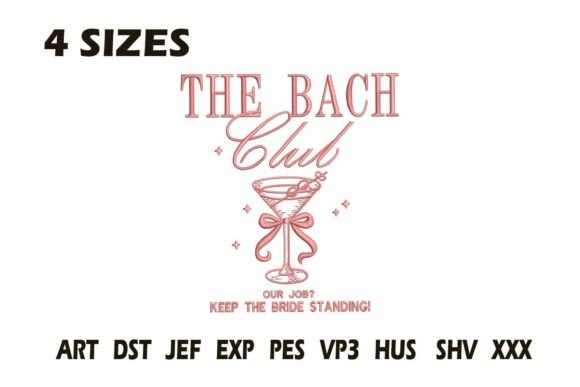
As an embroidery designer who’s stitched over 300 craft fair booths—from Portland pop-ups to Nashville handmade markets—I opened The Bach Club Embroidery expecting something lighthearted but intentional. What I got was a design that lands squarely in the “elegant-fun” sweet spot: not overly cutesy, not stiffly formal—just confident, clean, and unmistakably celebratory. The title alone signals clear intent: this is a Bachelorette-focused embroidery file built for joy, not just decoration. It reads as modern with subtle vintage charm—think linen aprons and matte-finish tote bags, not glitter glue or cartoon fonts. That balance makes it instantly shelf-ready for boutiques, Etsy sellers, and small shop owners who curate cohesive, giftable handmade products.
Where It Shines: Real Craft Fair Product Pairings
The Bach Club Embroidery performs strongest when placed on high-visibility, high-perceived-value items—especially those customers pick up, hold, and imagine gifting. On a natural canvas tote bag? Brilliant. The design reads clearly at arm’s length, holds its shape across the curved shoulder strap seam, and elevates a basic bag into a keepsake. As apron embroidery, it anchors beautifully above the pocket—neither too busy nor too sparse—and pairs effortlessly with neutral denim or oatmeal linen.
For tea towel embroidery, it shines brightest on medium-weight, low-lint cotton or linen blends. Avoid heavily textured waffle weaves—the stitch density could snag or blur fine lines. As an embroidered patch, it’s highly adaptable: sew-on or iron-on, it adds instant personality to denim jackets, market bags, or fabric pouches. And on pillow covers? Yes—it scales well without losing legibility, especially when centered on a 16x16” square. Just avoid placing it near deep seams or zippers where hooping gets tricky.
What Buyers Notice First (and Why It Sells)
At a crowded craft fair, attention lasts 2.7 seconds. The Bach Club Embroidery wins that blink-and-you-miss-it moment because it’s both recognizable and repeatable. Customers see “Bach Club” and instantly grasp the theme—no decoding required. That clarity boosts booth engagement: people stop, smile, say “Oh! For the bachelorette!” and reach for your embroidered tote or apron. It also photographs exceptionally well for online listings—clean lines, balanced negative space, and strong contrast potential make it ideal for printable mockups and Etsy seller thumbnails. Unlike overly ornate designs, it doesn’t pixelate or muddy in small-format previews.
Production Reality Check: Speed, Scale, and Stitch Smarts
This isn’t a marathon-stitch file—but don’t assume it’s effortless either. The Bach Club Embroidery includes subtle flourishes (think tapered serifs and delicate spacing between letters) that reward precision. It works cleanly as a 3–4” focal design on most items, but shrinks poorly below 2”. Tiny lettering loses impact on curved cap surfaces or dark fabric unless you adjust thread contrast intentionally. Also: check for dense fill areas—especially under “Club”—before stitching on thick fabrics like duck canvas or quilted pouches. A tear-away + cut-away stabilizer combo is non-negotiable for clean results on textured towels or slouchy market bags.
Design Assets That Build Your Brand—Not Just Your Booth
What makes The Bach Club Embroidery more than just another digital embroidery file? It supports brand consistency across your product line. Use it identically on tea towels, patches, and pillow covers, and customers begin to recognize your aesthetic—playful yet polished, handmade but professional. That cohesion strengthens your small shop product story, increases perceived value, and encourages bundle sales (“Get the tote *and* the matching pouch!”). For Etsy sellers, it’s a ready-made hero design for seasonal listings—pair it with “bachelorette party favors” or “bridesmaid gift set” tags and watch conversion lift.
Critical Designer Notes Before You Hoop Up
- Always test on scrap fabric first—especially if using dark thread on light linen or vice versa. Thread colors behave differently across fiber types.
- Review spacing and kerning in your embroidery software. Some machines compress tight lettering; verify “Bach Club” doesn’t run together at 3.5” wide.
- Confirm hoop size compatibility. If your machine requires a 5x7” hoop minimum, ensure the design fits comfortably within that boundary—including jump stitches and trim commands.
- Inspect stitch density manually. High-fill zones may require reduced speed or added stabilizer layers to prevent puckering on lightweight cotton.
- Create at least one real-world mockup—not just a digital preview. Drape that embroidered tote over your arm. Hold the tea towel in natural light. See how it moves, drapes, and catches the eye.
- Compare fabric colors side-by-side. A cream thread on ivory linen reads warm and luxe; the same thread on off-white poly-cotton can look dull or yellowed.
- Verify commercial licensing before selling finished products. This is a digital embroidery file, not a royalty-free graphic—ensure your license permits resale of physical handmade products and commercial embroidery.
Final Thought: This Is Booth-Ready—If You Treat It Like a Partner, Not Just a Pattern
The Bach Club Embroidery isn’t flashy—but it’s trustworthy. It won’t dominate your display like a neon floral motif, but it will convert browsers into buyers because it feels intentional, giftable, and authentically handmade. It respects your time (moderate stitch count, logical layering), honors your craft (clear hierarchy, smart spacing), and serves your customer (instant recognition, emotional resonance). In a sea of generic “Girls’ Night Out” designs, The Bach Club Embroidery stands out by being quietly confident—not shouting, but smiling. And at a craft fair? That kind of quiet confidence sells out before lunch.