Snowman in a Glass of Wine Embroidery
A Playful Yet Polished Brand Asset for Small Business Merch
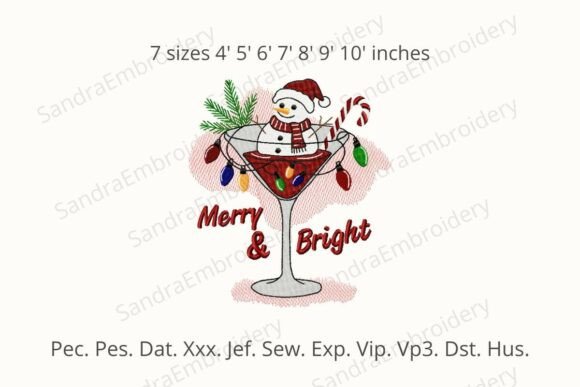
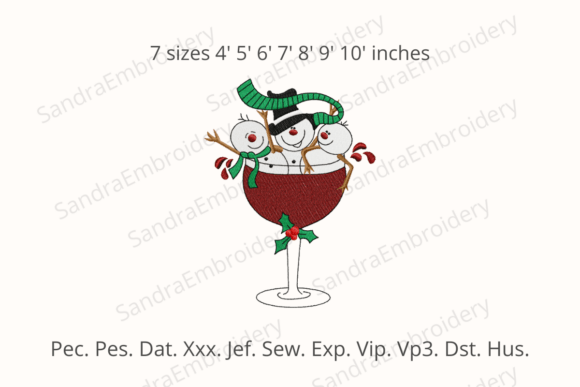
As an embroidery designer who’s developed hundreds of commercial designs for cafés, boutiques, bakeries, and handmade brands, my first impression of Snowman in a Glass of Wine Embroidery is immediate: it’s warm, intentional, and surprisingly versatile. The title alone signals approachability—no stiff formality, no overdesigned clutter—just cozy cheer with a wink. That’s gold for small business merch. It reads as handmade but not amateurish, festive but not kitschy, and seasonal without locking you into one month of sales. For a winter-themed machine embroidery design, it avoids cliché snowflakes and generic “Merry Christmas” fonts—and instead leans into personality, storytelling, and subtle sophistication.
Where This Design Delivers Real Business Value
Snowman in a Glass of Wine Embroidery shines brightest where brand voice meets functional product: aprons for coffee shops or bakeries, embroidered patches for local florists’ staff jackets, cap fronts for wine-tasting studios, and tote bags sold at holiday markets. I’ve used similar concepts for a downtown candle studio—their team wore navy aprons with this design on the chest, and customers consistently asked where to buy one. Why? Because it invites conversation, reflects lifestyle alignment (cozy + celebratory), and feels like part of the brand—not just decoration.
For Etsy sellers and craft businesses, this embroidery file works exceptionally well as a branded product add-on: stitch it onto linen tea towels bundled with holiday gift sets, embroider it onto reusable produce bags for a farmers’ market stall, or apply it as a sew-on patch on denim jackets sold as limited-edition seasonal merch. As a custom apparel accent, it performs strongly on sleeve hems, pocket flaps, and even inner collar tags—adding surprise value without overwhelming the garment.
In boutique merchandise, Snowman in a Glass of Wine Embroidery elevates perceived quality. Unlike printed logos that crack or fade, a well-executed embroidered patch signals care, durability, and intention. Customers associate that with premium handmade products—even when priced accessibly. And because it’s rooted in winter warmth rather than overt religious or corporate symbolism, it fits diverse audiences: pet brands adding charm to dog bandanas, florists launching holiday subscription boxes, or creative studios gifting embroidered coasters to clients.
Smart Placement & Practical Limits
This design thrives at medium scale—but tread thoughtfully in tight spaces. On cap fronts under 3 inches tall, the wine glass silhouette and snowman details may compress awkwardly unless simplified in your digitizing software. Similarly, avoid using Snowman in a Glass of Wine Embroidery on curved surfaces like baseball caps or tiny tote bag handles without testing hoop size and fabric stretch first. High stitch density around the glass rim or snowman buttons can cause puckering on lightweight cotton or textured burlap—so always pair it with cutaway stabilizer for structured results.
Dark uniforms? Yes—with contrast. Test thread colors against navy, charcoal, or burgundy fabrics before bulk production. White or light ecru thread pops cleanly; metallic silver adds festive flair but demands careful tension calibration. Avoid tiny lettering additions unless they’re part of the original embroidery file—you risk legibility loss and increased stitch count. And remember: frequent washing weakens fine outlines. If your café staff wears aprons daily, reinforce high-wear zones like corners and edges during digitizing—or opt for a slightly bolder outline version.
How It Strengthens Brand Identity & Customer Trust
Consistency builds recognition. When Snowman in a Glass of Wine Embroidery appears across multiple touchpoints—on a staff apron, a customer’s tote bag, and a shelf tag—it quietly reinforces your brand’s tone: joyful, grounded, human-scaled. That cohesion increases trust. Shoppers don’t just buy a towel—they remember how your brand made them feel: relaxed, included, warmly welcomed. For small businesses competing with big-box retailers, that emotional resonance is your differentiator.
It also supports visual consistency without rigidity. You can adapt thread palette to match existing brand colors—deep plum thread for a floral shop, sage green for a wellness studio—while keeping the core shape intact. That flexibility makes it a strong design asset, not a one-off novelty. And because it’s inherently shareable (people snap photos of clever aprons), it fuels organic engagement—especially on Instagram or TikTok, where handmade product storytelling thrives.
Essential Designer Notes Before Production
- Test in black and white first. Confirm readability and balance without color bias.
- Check minimum viable size. Does Snowman in a Glass of Wine Embroidery hold clarity at 2.5 inches wide? If not, simplify stems, reduce interior detail, or adjust stitch type.
- Review thread color contrast on your target fabric—especially for dark or heathered textiles.
- Inspect spacing between elements. Ensure the snowman’s hat doesn’t merge with the glass rim at smaller scales.
- Confirm hoop size compatibility with your embroidery machines—and whether the design fits standard 4x4 or requires 5x7.
- Always test on real fabric with your chosen stabilizer. Linen behaves differently than cotton twill; fleece hides density differently than canvas.
- Create a printable mockup for client approval—show it scaled correctly on an apron front, cap, or tote bag.
- Compare it beside other design assets. Does it complement your logo? Support your seasonal campaign? Fit your overall aesthetic?
- Verify commercial licensing before selling finished products. Not all digital embroidery files include blanket rights for resale—check terms before launching small business merch.