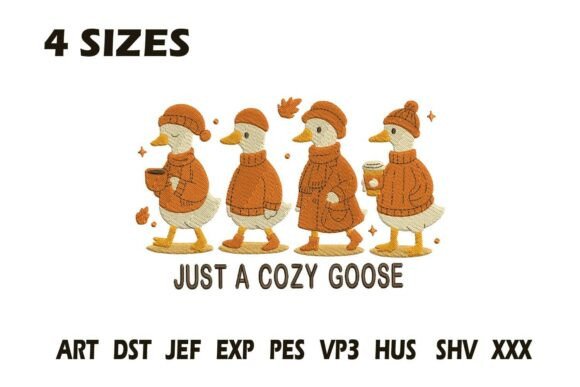
Just a Cozy Goose Embroidery
First Impression: Warm, Whimsical, and Instantly Autumn-Ready
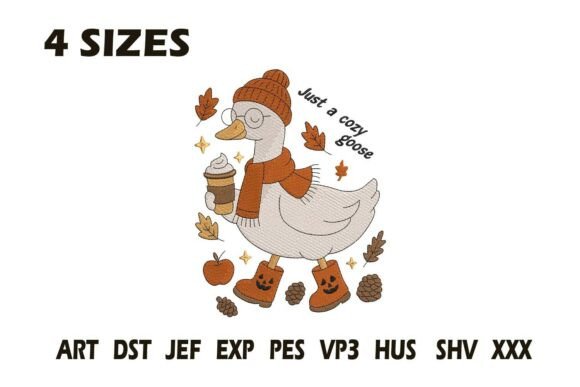
As an embroidery designer who’s prepped over 200 craft fair booths—from snowy holiday markets to sun-drenched summer fairs—I opened Just a Cozy Goose Embroidery expecting charm. What I got was more: a quiet confidence in its simplicity. It doesn’t shout—it *snuggles*. The title alone cues warmth, nostalgia, and gentle humor—perfect for the Autumn category without leaning into cliché pumpkins or falling leaves. This isn’t rustic farmhouse grit or minimalist Scandinavian cool. It’s soft storytelling: a goose curled up like a cinnamon roll, feathers suggested with rhythm rather than realism, posture relaxed but intentional. That subtle balance makes it feel handmade *by choice*, not by limitation.
Where It Shines on Craft Fair Products
Tote bags: A standout. At 4–5 inches wide, Just a Cozy Goose Embroidery anchors the lower corner of a natural canvas tote without overwhelming. Customers pause—not because it’s loud, but because it feels *inviting*. It reads clearly from three feet away, even in crowded booth lighting.
Aprons and tea towel embroidery: Ideal for the upper left chest or centered just above the pocket. Its rounded shape mirrors the drape of fabric, softening hard edges. On linen-blend tea towels, it adds personality without competing with food photography aesthetics—exactly what kitchen-focused shoppers love.
Embroidered patches and small pouches: Here’s where Just a Cozy Goose Embroidery earns repeat sales. As a sew-on patch (3" max), it’s giftable, collectible, and booth-friendly—no hoop changes needed between items. On cotton twill pouches, it reads as premium detail, not decoration.
Pillow covers and caps: Use with caution. On curved cap surfaces, test stitch density first—the goose’s rounded body may require repositioning or slight digitizing tweaks. Pillow covers? Perfect at 6–7", especially on oatmeal or charcoal linen. It feels intentional, not slapped on.
What Makes It Sell—Beyond Cute
This isn’t just another machine embroidery design—it’s a booth whisperer. In person, it draws slow looks, not quick glances. Shoppers tilt their heads. They smile. They pick up the tote bag and hold it closer. That micro-moment of connection is gold at a craft fair. It also photographs beautifully for Etsy listings: no harsh shadows, no confusing negative space, no tiny details that vanish on mobile screens. Its silhouette is strong, its scale forgiving, and its mood consistent across products—so your booth feels curated, not cluttered.
For small shop owners and Etsy sellers, Just a Cozy Goose Embroidery supports brand consistency without demanding rigid color palettes. It works on cream, olive, rust, charcoal, and oat—making batch production efficient. And yes, it’s repeatable: clean outlines, moderate stitch density, and no nested fills mean fewer thread breaks and faster hooping during back-to-back runs.
Careful-Use Notes Every Designer Should Check
- Dense stitch areas: The goose’s wing contour and eye detail pack slightly tighter stitches—test on your heaviest fabric (like duck cloth aprons) with medium-weight cutaway stabilizer.
- Small lettering? None—this is pure illustration. A huge plus. No risk of illegibility on dark fabric or textured towels.
- Fabric texture matters: Avoid heavy terry cloth or thick quilted cotton. Stick to smooth weaves (linen-cotton blends, poplin, canvas) where feather definition stays crisp.
- Dark fabric contrast: Works well—but verify thread colors before bulk stitching. A warm taupe or oat thread pops on navy; avoid black-on-black unless you’re using metallic or variegated thread intentionally.
- Size flexibility: Scales cleanly down to 2.5" (for patches) and up to 7.5" (pillow covers), but avoid going smaller—feather texture blurs below 2".
Real-World Designer Prep Checklist
- Test the embroidery file on scrap fabric matching your final product—especially if using textured tea towels or curved cap panels.
- Check thread contrast on at least two fabric colors—light and dark—before cutting into inventory.
- Review spacing around the goose’s outline: Is there enough breathing room when hooped near seams or corners?
- Confirm hoop size compatibility—most versions will fit standard 4x4 or 5x7 hoops, but double-check your machine’s specs.
- Inspect stitch density visually—not just in software. Dense fills trap heat; too many layers = puckering on lightweight fabrics.
- Use the right stabilizer: medium cutaway for apparel, tear-away for tea towels, fusible + tear-away for patches.
- Create at least one real mockup—a finished tote bag, not just a digital preview. Lighting, drape, and hand-feel change everything.
- Compare how it looks across fabric colors: Does it read as cozy on olive? Warm on cream? Sophisticated on charcoal?
- Confirm commercial licensing terms before selling finished products—this is non-negotiable for Etsy sellers and boutique makers.
Why It Belongs in Your Autumn Lineup
Just a Cozy Goose Embroidery isn’t seasonal window dressing—it’s emotional infrastructure. It says “handmade with care” without saying a word. It fits seamlessly into gift sets (goose + cinnamon-scented sachet + linen pouch), pairs naturally with other Autumn-themed designs (think acorns, wooly sweaters, mugs), and never competes with your voice—it amplifies it. For craft fair sellers, it’s low-risk, high-return: easy to explain, simple to produce, and memorable to buyers. For digital sellers, it’s a quietly powerful design asset—versatile enough for printable mockups, scalable for wholesale embroidery services, and distinctive enough to stand out in a sea of florals and quotes.
In short: this isn’t just another embroidery file. It’s a conversation starter, a value booster, and a reliable workhorse for the handmade entrepreneur who values both heart and hustle.